The Devil Wears Shein
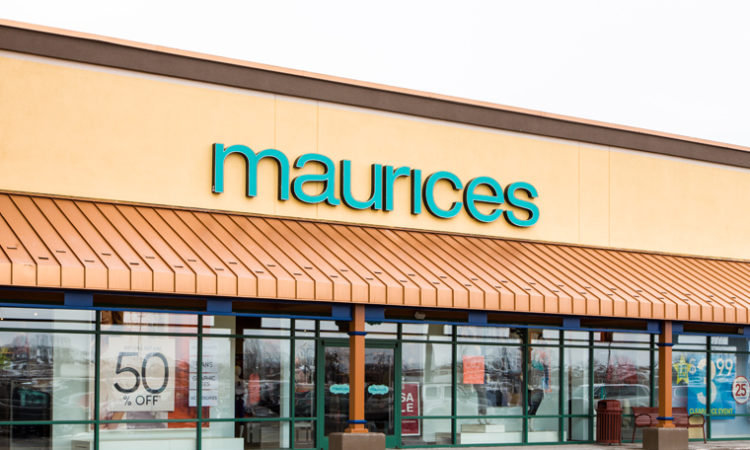
On Feb. 1, Duluth-based women’s apparel retailer Maurices announced that it would be laying off 43 employees—roughly 10% of its corporate headcount. This was a second round of layoffs following 24 staffers being let go in April 2023. Two months later, CEO David Kornberg departed after a little over two years at the helm. (The company’s current CEO is Jeff Kirwan, the former executive chairman of Maurices’ private-equity owner, London-based OpCapita.)
When Maurices, which operates around 900 stores in the U.S. and Canada, announced its layoffs last year, it pointed to challenging market conditions as a key factor. Maurices’ situation is hardly unique. What might be called “middle-of-the-road” or “mainstream” apparel retailers, even those with long histories of success, have been seen their sales unravel in recent years.
Case in point: Another Minnesota-based women’s apparel retail chain, Christopher & Banks, filed for bankruptcy in January 2021, closing its approximately 400 stores. (Now owned by New York-based IV Media, Christopher & Banks now operates six stores, including one in Coon Rapids, as well as an ecommerce site.) Once-hot retailers such as Ann Taylor, J. Crew, and Gap have also been wrestling with declining sales and financial instability.
Women still need clothing, of course. But according to Anne Mezzenga, a former Target executive who’s now co-CEO of Minneapolis-based Omni Talk Retail, a media outlet covering retail and future trends, they’re shopping for apparel very differently these days. “You’re seeing a lot of conventional retailers—especially women’s apparel retailers—struggle during this time,” Mezzenga says.
Probably needless to say, the pandemic had a massive impact on all apparel retailers, particularly those with bricks-and-mortar locations. (Christopher & Banks cited Covid as a key reason for its bankruptcy.) But an even bigger disruption to “mainline” apparel retailers has been the relentless invasion of overseas-based fast-fashion giants including Shein, Temu, Zara, and H&M into the U.S. market. Los Angeles-based Forever 21 still operates hundreds of stores worldwide since coming out of bankruptcy three years ago; Shein is now a minority owner.)
“They’re offering products at a lower price—and products that are on trend,” Mezzenga notes. The Sheins and Zaras are “able to take runway looks inspired by the likes of Gucci or Balenciaga, replicate them, and sell them at bargain-basement prices.” What’s more, “they’re turning around apparel inspired by what they see on fashion runways in in two weeks.” That’s in contrast to the likes of Gap, Maurices, the Limited, and other mall brands, “which are still doing things very much the traditional retail way.” That approach involves planning, sourcing, and buying products “months in advance.”
The fast-fashion powerhouses are benefiting from their ability to get those designs in customers’ hands quickly. By the time they reach traditional apparel retailers, those new designs “won’t be in demand or differentiated once they hit the shelves at your local mall six to seven months later,” Mezzenga says.
“I think that’s where the [apparel retail] trend is going,” she adds. “It’s certainly where the next generation of consumers is looking.” What’s more, that trend is “trickling up into older demographics. It’s certainly Impacting what they’re willing to pay for a T-shirt at the Gap nowadays.”
As a result, traditional apparel retailers, even once-trendy brands like J. Crew and Gap, are struggling. “It’s hard to demand the price point that they once could capture for a product that’s off-trend, or the same as what every other retailer has,” Mezzenga says. In addition, those slower brands aren’t differentiating themselves in the market. “Everyone in that middle-of-the-road apparel group—nothing’s really setting them apart anymore,” she says. These retailers tend to sell very similar T-shirt, denim, athleisure, and legging designs, items that big box retailers or online retailers like Amazon can provide at lower price points.
Mezzenga believes that even the big boxes are being stressed by their newer, faster competitors. “I think Shein is one of the biggest threats to the women’s apparel market in the U.S. right now,” she says, thanks to “the speed, the volume they’re doing, and the way that they’re approaching the shopping experience.”
Finding new relevance
How can traditional apparel retailers respond to the challenge? For one, “the brands need to be relevant again,” Mezzenga says. She notes the efforts of Gap to do just that, hiring former Mattel president Richard Dickson as CEO and designer Zac Posen as creative director for both Gap and its Old Navy brand. But Mezzenga believes that bringing in superstar execs won’t be sufficient to turn things around. Traditional apparel retailers need to adjust to “the new consumer demand,” she says. “That’s what it comes down to, plain and simple.”
While apparel retailers struggle to adjust to faster competitors, Mezzenga also believes that they’ll also need to fashion more distinctive brand identities. One retailer she believes has been successful in doing this in Japan-based Uniqlo, whose nearly 4,000 stores strive to offer lower-priced products via environment- and labor-friendly practices. Critics say that Uniqlo could do much more. Still, the “ethos of that brand helps it stand apart,” Mezzenga says.
As for Maurices, it’s worth noting that it’s been in business for more than 90 years. It also has carved out a niche as a smaller-market women’s apparel retailer, and it doesn’t have to deal with pressure from public shareholders. But as its recent layoffs suggest, it’s not immune to the fickleness of retail fashion.